
If you are researching electric bikes, you have probably come across one of the most common debates in the industry: hub motor vs mid drive. Riders constantly ask which system delivers more power, better range, smoother performance, and long term reliability.
The truth is, both motor types have advantages. The real answer depends on how and where you ride.
In this guide, we break down the real world differences between hub motors and mid drive motors, including power delivery, hill climbing, maintenance, efficiency, and performance for off road riding. If you are considering a high performance electric bike or electric dirt bike, this comparison will help you make the right decision.
What Is a Hub Motor?
A hub motor is mounted inside the front or rear wheel hub. It directly powers the wheel without using the bike’s chain or drivetrain.
Hub motors are common on commuter e-bikes and entry level electric bikes because they are simple, cost effective, and require minimal maintenance.
Advantages of Hub Motors
Hub motors are easy to maintain because they operate independently from the drivetrain. They do not add stress to your chain or cassette. They are also generally quieter and smoother for flat pavement riding.
For casual riders and city commuters, hub motors work extremely well.
Limitations of Hub Motors
Hub motors struggle more on steep hills because they cannot leverage your bike’s gears. They deliver power directly to the wheel at a fixed ratio. This means efficiency drops significantly on inclines or off road terrain.
For high speed or high torque electric dirt bikes, hub motors can feel less responsive under heavy load.
What Is a Mid Drive Motor?
A mid drive motor is mounted at the center of the frame near the crankset. Instead of powering the wheel directly, it powers the drivetrain through the chain.
This allows the motor to use the bike’s gears just like a rider would.
Mid drive systems are commonly found on performance oriented electric bikes and off road e-bikes because they provide better torque multiplication and hill climbing ability.
Hub Motor vs Mid Drive: Key Differences
Let’s break down the real world differences that matter most.
1. Power and Torque
Mid drive motors typically deliver stronger climbing torque because they use your gearing system. When you shift into a lower gear, the motor also benefits from that mechanical advantage.
For steep hills, off road riding, or aggressive terrain, mid drive systems are usually superior.
Hub motors can still produce high wattage, but their torque delivery is less adaptable across terrain changes.
If you are looking at high torque electric dirt bikes or 72V e-bikes, mid drive performance becomes even more noticeable.
2. Hill Climbing Performance
This is where mid drive motors clearly win.
Because they use the drivetrain, they can maintain efficiency on steep climbs. Hub motors tend to overheat more easily on extended uphill sections because they cannot adjust mechanical leverage.
For riders tackling trails, dirt, sand, or mountain terrain, mid drive systems are typically the better choice.
3. Speed and Top End Performance
Both hub motors and mid drive systems can achieve high speeds depending on voltage and controller tuning.
However, high performance 72V systems often pair better with mid drive setups because they deliver both speed and torque without sacrificing hill efficiency.
If you are researching electric dirt bike style e-bikes capable of 50 to 65 mph, the motor configuration matters significantly.
4. Maintenance and Wear
Hub motors place less strain on the chain and cassette since they do not power the drivetrain. That means less frequent chain replacement.
Mid drive motors do increase drivetrain wear because the motor’s power runs through the chain. This means chains and cassettes may need replacing more often, especially under aggressive riding.
However, for riders prioritizing performance over minimal maintenance, this tradeoff is often worth it.
5. Weight Distribution and Handling
Mid drive motors are mounted in the center of the frame. This creates better balance and more natural handling, especially off road.
Hub motors add weight to the wheel itself. This can slightly affect suspension performance and overall handling on rough terrain.
For trail riding and high speed dirt riding, balanced weight distribution becomes more important.
6. Efficiency and Battery Range
Mid drive systems can be more efficient on varied terrain because they use gearing to stay within optimal RPM ranges.
Hub motors may consume more battery on steep climbs or uneven terrain because they work harder to maintain torque without gearing assistance.
If maximizing range is important, mid drive systems often perform better in mixed conditions.
Which Is Better for Commuting?
For city riders on relatively flat roads, hub motors are often more than sufficient.
They are simple, affordable, quiet, and easy to maintain. For daily commuting and casual riding, a hub motor e-bike works extremely well.
Which Is Better for Off Road Riding?
For off road trails, hills, sand, and aggressive riding, mid drive motors are generally superior.
They provide better torque, more control, and improved climbing ability. If you are looking for an electric dirt bike experience with real off road capability, mid drive performance shines.
What About High Voltage Systems Like 72V?
This is where the conversation gets interesting.
High voltage systems such as 72V e-bikes dramatically increase power output, acceleration, and top speed potential.
When combined with advanced controller tuning and torque optimized programming, these systems blur the line between traditional e-bikes and electric dirt bikes.
For riders looking at 72V setups, motor type matters less than overall system design, controller quality, torque output, and riding modes.
In high performance builds, the motor and controller integration matter more than whether it is technically hub or mid drive.
Who Should Choose a Hub Motor?
Choose a hub motor if:
You primarily ride on pavement
You want lower maintenance
You value simplicity
You commute daily
You ride mostly flat terrain
Who Should Choose a Mid Drive?
Choose a mid drive if:
You ride hills or mountains
You ride off road trails
You want maximum torque
You want better climbing efficiency
You prioritize performance over minimal maintenance
Real World Takeaway
The question is not simply hub motor vs mid drive. The better question is how you ride.
If you want smooth city commuting, hub motors are excellent.
If you want aggressive off road performance, steep hill climbing, and high torque output, mid drive systems offer advantages.
For riders researching high speed electric dirt bikes or powerful 72V e-bikes, motor configuration should be evaluated alongside controller tuning, battery capacity, torque ratings, and overall build quality.
Which Is Better for You?
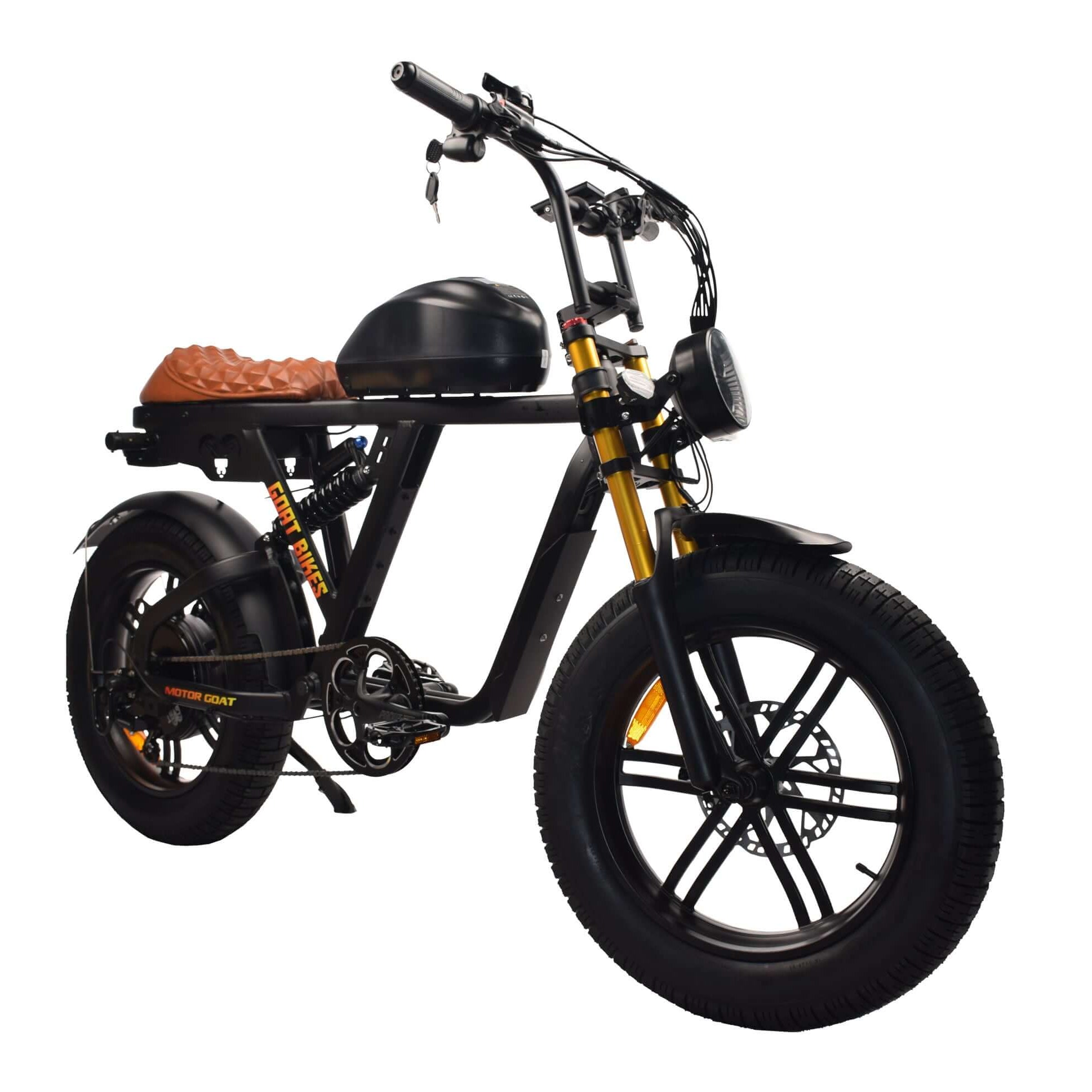
If you want smooth throttle power and simple, low-maintenance performance, a high-powered hub motor setup like the Motor Goat V3, Billy Goat V3, or Power Goat V3 is a strong choice for street and mixed-terrain riding.
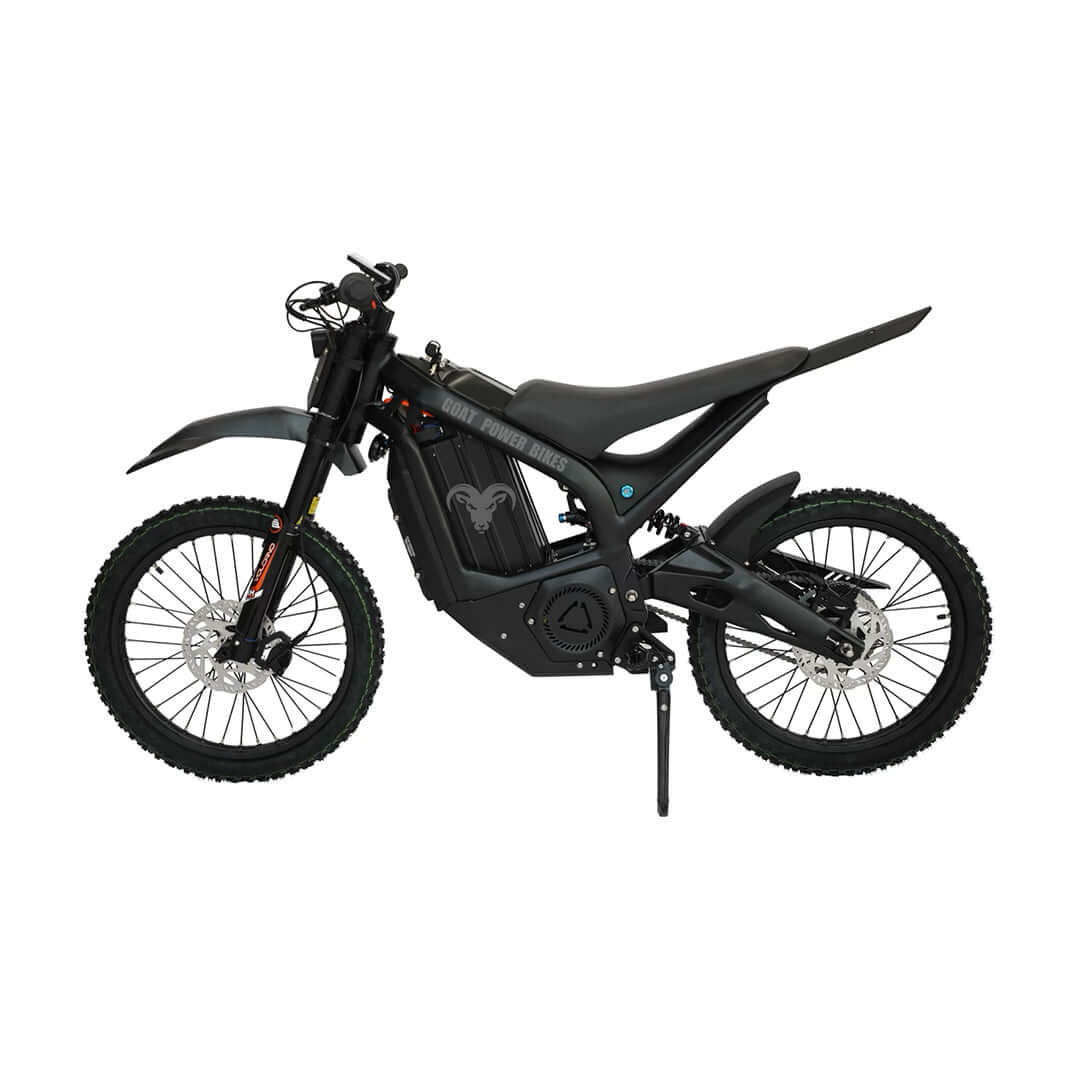
If you’re after aggressive torque delivery and off-road performance that feels closer to a dirt bike, models like the King Goat and Dirt Goat 96V deliver next-level power and hill-climbing capability.
The right choice comes down to how you ride, but if you want serious torque, speed, and real-world performance, GOAT Power Bikes are built to deliver.